


I’ve been taking this for the past few days and definitely feel a difference in my energy and focus. It is very effective for sure
Use code NEW15 to save 15% on your 1st order. FREE UK next day delivery if you order before 3PM . FREE USA delivery 5-7 days.


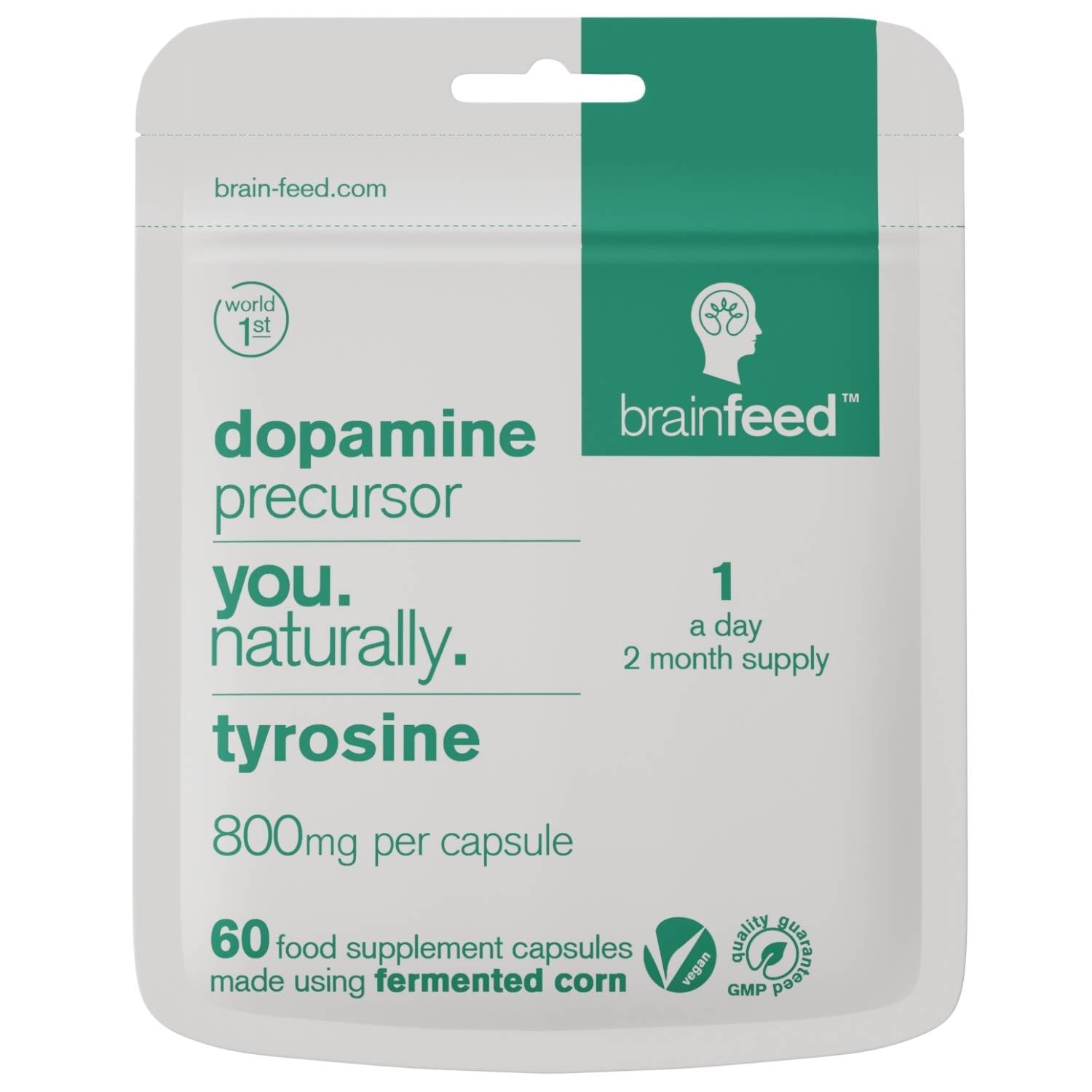
World’s 1st 800mg natural tyrosine capsules from fermented corn. Tyrosine is the building block to your reward and pleasure chemical dopamine [1]. Dopamine is also linked to alertness and motivation [2,3].
Our L-tyrosine supplement is manufactured in the UK under strict GMP, ISO 9001, and ISO 22000 certified conditions in an FDA-registered facility.
brain feed analysed 44 published trials which confirmed tyrosine supports the production and function of dopamine. Backed by science, proven by research.


*brain feed does not test or commission studies on animals. This is an analysis of pre-existing studies.
Tyrosine is a naturally occurring nutrient and the building block for dopamine, the brain’s reward and pleasure chemical [1].
Before it becomes dopamine, tyrosine undergoes a conversion process in the brain. Tyrosine is also the precursor to your thyroid hormone [6].


Dopamine is a neurotransmitter naturally produced in your body. Feeling alert, a sense of accomplishment or the momentum to get things done are all part of dopamine's role. Your dopamine levels are influenced by:
A study found that in the brains of highly motivated individuals, there was an increased release of dopamine in the areas that involve reward and motivation [15].


When dopamine levels are high, you may experience more pleasure from activities and are more likely to feel the reward after completing a task [4].
Track how tyrosine works for you over time. Adapted from research methods used in over 80 clinical trials across 25 years, brain feed’s user-friendly self-assessments deliver near-instant results. Monitor your brain health through a simple 3-step process, included with your first tyrosine order to track results at baseline, 1 day, and 30 days.


Before you can release dopamine, ensure your body has enough tyrosine, as adequate production is necessary to reap its effects.Dopamine gets released when you're anticipating a positive outcome or actual physical reward, helping you feel motivated to seek more of those rewarding outcomes [16] including:

Lorem ipsum dolor sit amet, consectetur adipisicing elit, sed do eiusmod tempor incididunt ut labore et dolore magna aliqua. Ut enim ad minim veniam, quis nostrud exercitation ullamco laboris nisi ut aliquip ex ea commodo consequat. Duis aute irure dolor in reprehenderit in voluptate velit esse cillum dolore eu fugiat nulla pariatur.

Lorem ipsum dolor sit amet, consectetur adipisicing elit, sed do eiusmod tempor incididunt ut labore et dolore magna aliqua. Ut enim ad minim veniam, quis nostrud exercitation ullamco laboris nisi ut aliquip ex ea commodo consequat. Duis aute irure dolor in reprehenderit in voluptate velit esse cillum dolore eu fugiat nulla pariatur.

Lorem ipsum dolor sit amet, consectetur adipisicing elit, sed do eiusmod tempor incididunt ut labore et dolore magna aliqua. Ut enim ad minim veniam, quis nostrud exercitation ullamco laboris nisi ut aliquip ex ea commodo consequat. Duis aute irure dolor in reprehenderit in voluptate velit esse cillum dolore eu fugiat nulla pariatur.

Lorem ipsum dolor sit amet, consectetur adipisicing elit, sed do eiusmod tempor incididunt ut labore et dolore magna aliqua. Ut enim ad minim veniam, quis nostrud exercitation ullamco laboris nisi ut aliquip ex ea commodo consequat. Duis aute irure dolor in reprehenderit in voluptate velit esse cillum dolore eu fugiat nulla pariatur.

Purity has four components:
1. brain feed ensures the high quality of our extracts and isolates through rigorous testing
2. We monitor critical control points during production for quality control
3. We guarantee the amount of active ingredient(s)
4. Preserve the bio-active compounds for the duration of their shelflife.
Click here to read more
Overall rating: 4.2 / 5 from 246 reviews.
I’ve been taking this for the past few days and definitely feel a difference in my energy and focus. It is very effective for sure
Great products!
I love this product. It is NOT a stimulant... it just get's whatever neurons have been in the way - out of the way, so that I can get things done.
As just starting taking tablets,to early to say.
As first time using,will wait to give review
Seems to be a great product but would like some guidance on if it should be taken with or without food.
I weight 107 lbs. and I'm very active. I've been taking 500 mg with success, however, my first day with the 800 mg is not going well. My vision is off; It's blurry.
Hello, I just haven’t noticed any change… I need to rethink how I move forward.. Thanks
Very happy with results
Amazing stuff … no adjustment or nuanced side effects - just positive clarity and focus improvement! Really excellent product.
Great fast service!
I`like
Works well
-
-
I noticed a benefit within days of taking this supplement. Energy, mood and libido increased. I took larger does, several capsules a couple times a day. On an empty stomach.
-
I still haven't received mine
-
Waste of money
Works as expected
-
-
-
-
I had a terrible headache and felt dizzy for the three days I took this product. No, I suggest you ask your doctor before taking this.
I bought this product because I thought it would improve my labido. The medication did not help. Also, it gave me really bad headaches!
-
-
-
-
-
-
-
-
I've only taken two tablets so far. So I can’t say anything
Good quality product but after 4 days they were causing me "fatigue" so now asking for refund.
I tried it for about 2 weeks but had to stop due to adverse side effects of fatigue and nausea. The fatigue was the real killer.
-
Terrible

May 15, 2026

Mar 20, 2026

Dec 18, 2024