

- Category
- Products
- Conditions
Lifestyle articles
 alertness
 cognition
 sleep
sleep
 wellbeing
Science articles
Joe Rogan supplements list 2026: podcaster’s intake for brain health
filter
Image courtesy of Daniel Torok via Wikimedia Commons
Summary
- Joe Rogan supplements list consists of many, including omega 3, Alpha Brain, magnesium, vitamin D and a multivitamin.
- While for Joe Rogan, Alpha Brain is his go to, science supports supplementation with its active ingredient Alpha GPC individually.
- Science-based techniques for brain-hacking other than supplementation include quality sleep, diet, and exercise.
Joe Rogan has become one of the most influential voices in health optimisation, using his podcast The Joe Rogan Experience to openly discuss his supplement stack with tens of millions of listeners. But beyond celebrity endorsements, what does science say about nutrition supporting brain health? And more importantly, is the Joe Rogan supplements-inspired list really relevant for it? Whilst Joe Rogan does not have formal medical or scientific qualifications, his frequent podcast guests include neuroscientists, medical doctors and nutrition experts whose expertise helps shape his own views and recommendations.
What supplements does Joe Rogan use?
Joe Rogan takes over a dozen supplements daily. Joe Rogan's supplements list is broad, spanning:
-
Omega fats,
-
Nutrients supporting cognitive function,
-
Vitamins,
-
Natural compounds that aid in stress management, and
-
Cellular energy boosters.
He typically takes these supplements in the morning as part of a structured, performance-focused routine, with brain-targeted nootropics taken before demanding tasks. The driving philosophy is to move from treating illness to optimising baseline performance, a model now widely referred to as biohacking.
 The science supports several of Rogan's choices. Here are his top 5.
-
Omega 3
Omega 3 is one of the most well-known and used supplements for brain health. Specifically, DHA boasts multiple brain health claims from the European Food Safety Authority[1 Trusted Source 2011 - EFSA Journal 3rd-party source Scientific Opinion on the substantiation of health claims related to docosahexaenoic acid (DHA), eicosapentaenoic acid (EPA) and brain, eye and nerve development ] ,[2 Trusted Source 2010 - EFSA Journal 3rd-party source Scientific Opinion on the substantiation of a health claim related to docosahexaenoic acid (DHA) and maintenance of normal brain function ] ,[3 Trusted Source 2009 - EFSA Journal 3rd-party source Scientific Opinion on DHA and support of the cognitive development of the unborn child and breastfed infant ] . A 2025 analysis of 58 studies confirmed that intake of omega 3 fats was significantly associated with increased cognitive abilities[4 Trusted Source 2025 - Scientific Reports Systematic review and meta-analysis A systematic review and dose response meta-analysis of Omega 3 supplementation on cognitive function ] . It has also been suggested to support the growth of the information-receiving part of brain cells[5 Trusted Source 2012 - Biomolecules & Therapeutics Research evaluation Effects of docosahexaenoic Acid on neurotransmission ] . DHA also makes up the majority of the structural fats in the central nervous system, meaning adequate intake is essential for maintaining cell membrane fluidity and efficient neurotransmitter signalling over a lifespan[6 Trusted Source 2016 - Nutrients Research evaluation Docosahexaenoic Acid and Cognition throughout the Lifespan ] . Read more about what is DHA. In a podcast with a popular nutritional biochemist Rhonda Patrick from 2019, Joe Rogan explains he takes three tablespoons of fish oil. In Joe Rogan’s instagram post he stated he takes his omega 3s every morning, getting around 4,5g of DHA and 7,2 g of EPA. This is a particularly high intake, especially as the European Food Safety Authority (EFSA) sets a suggested upper limit of 1 g per day for DHA. For those seeking a concentrated source within these guidelines, brain feed’s vegan omega 3 from algae oil boasts 600mg of DHA in one capsule.


-
Alpha GPC
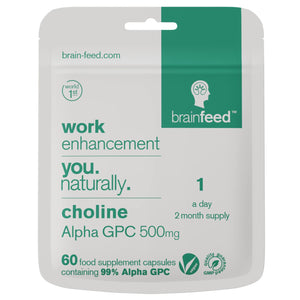
Choline is a nutrient found in protein-rich foods. A potent form of choline called Alpha GPC is a direct precursor to the memory and learning chemical acetylcholine. Acetylcholine supports your memory and information recall. What supplement brand does Joe Rogan recommend? Rogan most consistently recommends Onnit’s Alpha Brain. In a podcast with Onnit’s CEO, he says he takes it before recording podcasts and UFC commentary to support his word recall. It is a formula combining multiple nutrients, Alpha GPC being one of them. A pilot study published in 2015 and a subsequent RCT demonstrated statistically significant improvements in verbal memory and executive function in the Alpha Brain group compared to placebo over six weeks[7 Trusted Source 2015 - Journal of the International Society of Sports Nutrition Human study A randomized, double-blind, placebo controlled, parallel group, efficacy study of alpha BRAIN® administered orally ] . Alpha GPC is the active ingredient in the formulation most frequently suggested to impact memory and brain function, as seen in a review of 7 studies on adult cognitive dysfunctions[8 Trusted Source 2023 - Journal of Alzheimer's Disease Systematic review and meta-analysis Activity of Choline Alphoscerate on Adult-Onset Cognitive Dysfunctions: A Systematic Review and Meta-Analysis ] . Read the Alpha Brain review to understand more how it compares to Alpha GPC. If you’re looking for a single-ingredient quality supplement, brain feed developed the World’s 1st 500mg Alpha GPC capsules containing 99% Alpha GPC.


-
Vitamins and minerals
What tablets does Joe Rogan take? Magnesium, vitamin D and a multivitamin is what he swears by.
Magnesium is an important nutrient, impacting more than 600 chemical reactions in the body[9 Trusted Source 2024 - Cureus Research evaluation Magnesium Matters: A Comprehensive Review of Its Vital Role in Health and Diseases ] . A specific potent form of magnesium, magnesium l-threonate, has been popular amongst supplement-takers in the last few years. A 2026 study published in Frontiers in Nutrition found that magnesium L-threonate supplementation over six weeks significantly improved overall cognitive performance, working memory, and reaction time, with an estimated 7.5-year reduction in brain cognitive age compared to the placebo group[10 Trusted Source 2026 - Frontiers in Nutrition Human study The effects of magnesium L-threonate (Magtein®) on cognitive performance and sleep quality in adults: a randomised, double-blind, placebo-controlled trial ] . While the exact dose and timing wasn’t confirmed by Joe Rogan himself, he expressed interest in Andrew Huberman sleep cocktail in which the famous neuroscientist and podcaster recommends 300-400 mg of threonate 30-60 minutes before bedtime.
Vitamin D supplementation is critical for more than just bone health. Scientific literature links adequate Vitamin D levels to neuroprotection, the regulation of proteins that promote neuron survival[11 Trusted Source 2013 - Neuropathology and Applied Neurobiology Research evaluation The role of vitamin D in nervous system health and disease ] . Severe deficiencies are frequently correlated with cognitive impairment[12 Trusted Source 2012 - Dementia and Geriatric Cognitive Disorders Systematic review and meta-analysis Vitamin D deficiency, cognitive impairment and dementia: a systematic review and meta-analysis ] . Joe Rogan takes 5000 IU or 125 mcg of Solgar’s vitamin D based on his podcast with Rhonda Patrick.
A multivitamin can act as foundational nutritional insurance. A recent large-scale clinical trial has suggested that daily multivitamin supplementation in older adults can significantly slow cognitive aging and improve executive function by filling gaps in modern diets[13 Trusted Source 2023 - Alzheimer's & Dementia Human study Effects of cocoa extract and a multivitamin on cognitive function: A randomized clinical trial ] . More well-known neuroscientists like Rhonda Patrick supplements list include a multivitamin. Despite the increased popularity, choosing a high-quality multivitamin is especially important in order to help you increase the intake of nutrients to an adequate level. Most budget ones don’t do that since the dose is low and the form used is less bioavailable. In Joe Rogan’s instagram post he evidenced he takes Pure Encapsulations’ Athletic Pure pack, containing 9 capsules as one serving. They provide a myriad of nutrients.
Click to view table
|
Nutrient |
Amount per serving |
|
Vitamin A (as beta carotene) |
1,500 mcg |
|
Vitamin C (as ascorbic acid) |
1,125 mg |
|
Vitamin D (as cholecalciferol, D3) |
12.5 mcg (500 IU) |
|
Vitamin E (as d-alpha tocopherol succinate & natural tocopherols) |
34 mg |
|
Vitamin K (as vitamin K1) |
50 mcg |
|
Thiamin / B1 (as thiamin HCl) |
12.5 mg |
|
Riboflavin / B2 (as B2 & activated B2) |
16.7 mg |
|
Niacin (as niacin & niacinamide) |
38 mg |
|
Vitamin B6 (as pyridoxine HCl & activated B6) |
10 mg |
|
Folate (as Metafolin®, L-5-MTHF) |
333 mcg DFE (200 mcg L-5-MTHF) |
|
Vitamin B12 (as methylcobalamin) |
500 mcg |
|
Biotin |
400 mcg |
|
Pantothenic Acid / B5 (as calcium pantothenate) |
25 mg |
|
Choline (as choline bitartrate) |
10 mg |
|
Calcium (as calcium citrate) |
100 mg |
|
Iodine (as potassium iodide) |
100 mcg |
|
Magnesium (as magnesium citrate) |
100 mg |
|
Zinc (as zinc citrate) |
7.5 mg |
|
Selenium (as selenomethionine) |
100 mcg |
|
Copper (as copper glycinate) |
1 mg |
|
Manganese (as manganese citrate) |
1 mg |
|
Chromium (as chromium polynicotinate) |
100 mcg |
|
Potassium (as potassium phosphate) |
50 mg |
|
Boron (as boron glycinate) |
1 mg |
|
Vanadium (as bis-glycinato oxo vanadium) |
50 mcg |
|
Proprietary Mixed Carotenoid Blend (lutein, lycopene, zeaxanthin) |
240 mcg |
|
Inositol |
25 mg |
|
Creatine monohydrate |
375 mg |
|
Coenzyme Q10 |
145 mg |
|
Alpha-ketoglutarate |
25 mg |
|
N-acetyl-L-cysteine (free-form) |
75 mg |
|
Alpha lipoic acid |
50 mg |
|
L-carnosine |
25 mg |
|
L-glutamine (free-form) |
850 mg |
|
PowerGrape® grape extract (whole fruit) |
100 mg |
|
Superfruit Antioxidant Blend (acai, pomegranate, acerola, quercetin) |
30 mg |
|
Green tea extract (leaf, decaffeinated, 70% EGCG) |
25 mg |
|
Fish oil concentrate (from anchovies, sardines, mackerel) |
1,000 mg |
|
EPA (eicosapentaenoic acid) |
300 mg |
|
DHA (docosahexaenoic acid) |
200 mg |
What does Joe Rogan take for his brain?
Besides Alpha Brain, he primarily relies on lion's mane mushroom. In parallel to the previously discussed product, Rogan regularly takes lion's mane mushroom, a functional mushroom that has attracted serious neuroscience interest for its potential to stimulate the growth and development of new brain cells, a process called neurogenesis[14 Trusted Source 2023 - International Journal of Molecular Sciences Research evaluation Neurotrophic and Neuroprotective Effects of Hericium erinaceus ] . A landmark 2023 study on 41 healthy adults found that specific isolated compounds from lion's mane mushroom improved cognitive performance[15 Trusted Source 2023 - Nutrients Human study The Acute and Chronic Effects of Lion's Mane Mushroom Supplementation on Cognitive Function, Stress and Mood in Young Adults: A Double-Blind, Parallel Groups, Pilot Study ] . Despite some positive results in studies, lion’s mane is non-standardised meaning it’s hard to know what kind of effects each batch will have. Other compounds like DHA also support the growth of brain cells, and are deemed safe by EFSA, providing a safer alternative.

Top 3 key takeaways for longevity
While supplement stacking is increasing in popularity, you don’t always need dozens of them to achieve optimal baseline for your brain health. Here is a practical, science-based approach you can implement today:
-
Work on your diet first: Supplements can’t out-work a poor diet. Ensure you include nutrient-rich whole foods into your diet like veggies, fruits and legumes, adding enough protein-rich sources like unprocessed meat and fish to support your brain chemicals[16 Trusted Source 2022 - Current Nutrition Reports Research evaluation Effect of Dietary Intake Through Whole Foods on Cognitive Function: Review of Randomized Controlled Trials ] .
-
Prioritise the “big three” lifestyle factors: While you can also decide to supplement, ensuring your foundation is solid is the key:
-
Aim for 7-9 hours of quality sleep which helps the body’s homeostasis[17 Trusted Source 2015 - Sleep 3rd-party source Joint Consensus Statement of the American Academy of Sleep Medicine and Sleep Research Society on the Recommended Amount of Sleep for a Healthy Adult ] ,
-
Engage in regular medium or high intensity exercise which supports neurogenesis and helps important chemical messengers get released[18 Trusted Source 2017 - Brain Plasticity Research evaluation The Effects of Acute Exercise on Mood, Cognition, Neurophysiology, and Neurochemical Pathways: A Review ] , and
-
Stress can fundamentally alter cognitive performance. Manage it through mindfulness or even try sauna and cold-plunge routines as popularised by Rogan to build resilience[19 Trusted Source 2017 - Journal of Psychiatric Research Systematic review and meta-analysis Mindfulness mediates the physiological markers of stress: Systematic review and meta-analysis ] ,[20 Trusted Source 2025 - PLoS One Systematic review and meta-analysis Effects of cold-water immersion on health and wellbeing: A systematic review and meta-analysis ] . Read more on the brain benefits of cold water therapy.
-
If you do supplement, supplement smartly and safely:
-
To support brain cell structure, start with DHA.
-
Add vitamins and minerals that you feel the need for because your body is deficient in. For example, opt for high quality vitamin D in the winter months when there is less sun.
-
If you require a boost for demanding cognitive tasks, look into single standardised ingredients to ensure efficacy and safety. To increase your acetylcholine directly, opt for Alpha GPC rather than complex blends.
What Joe Rogan represents, beyond the podcast celebrity, is a generation of biohackers demanding neuroscience-backed solutions to cognitive performance and mental wellbeing. The shift from reactive medicine to proactive brain optimisation is where the science is heading, and where the most targeted nutritional supplements are already making a measurable difference.
References
[1] EFSA Panel on Dietetic Products, Nutrition and Allergies (NDA) (2011). Scientific Opinion on the substantiation of health claims related to docosahexaenoic acid (DHA), eicosapentaenoic acid (EPA) and brain, eye and nerve development (ID 501, 513, 540), maintenance of normal brain function (ID 497, 501, 510, 513, 519, 521, 534, 540, 688, 1323, 1360, 4294), maintenance of normal vision (ID 508, 510, 513, 519, 529, 540, 688, 2905, 4294), maintenance of normal cardiac function (ID 510, 688, 1360), “maternal health; pregnancy and nursing” (ID 514), “to fulfil increased omega-3 fatty acids need during pregnancy” (ID 539), “skin and digestive tract epithelial cells maintenance” (ID 525), enhancement of mood (ID 536), “membranes cell structure” (ID 4295), “anti-inflammatory action” (ID 4688) and maintenance of normal blood LDL-cholesterol concentrations (ID 4719) pursuant to Article 13(1) of Regulation (EC) No 1924/2006. EFSA Journal, 9(4):2078 [30 pp.]. https://efsa.onlinelibrary.wiley.com/doi/10.2903/j.efsa.2011.2078?__cf_chl_tk=0whV4CV53EbCNsfSBONSSljW4MayeuPlBUhQyeCG6xE-1779456511-1.0.1.1-c50J2MS8peQx61TAPF2gVBWYE9GjanqVM2BYJsvZu4o
[2] EFSA Panel on Dietetic Products, Nutrition and Allergies (NDA) (2010). EFSA Panel on Dietetic Products, Nutrition and Allergies (NDA); Scientific Opinion the substantiation of a health claim related to docosahexaenoic acid (DHA) and maintenance of normal (fasting) blood concentrations of triglycerides (ID 533, 691, 3150), protection of blood lipids from oxidative damage (ID 630), contribution to the maintenance or achievement of a normal body weight (ID 629), brain, eye and nerve development (ID 627, 689, 704, 742, 3148, 3151), maintenance of normal brain function (ID 565, 626, 631, 689, 690, 704, 742, 3148, 3151), maintenance of normal vision (ID 627, 632, 743, 3149) and maintenance of normal spermatozoa motility (ID 628) pursuant to Article 13(3) of Regulation (EC) No 1924/2006. EFSA Journal, 8(10):1734. [27 pp.]. https://efsa.onlinelibrary.wiley.com/doi/10.2903/j.efsa.2010.1734?__cf_chl_tk=8Ju_LFhzP4BCyk7KiEhk_xn4c1qZmhvhNS1OaX0mj30-1779456508-1.0.1.1-AnWpnTz4mBU8HdtrlvsRy2dJ3uOTCEZVIeUFW0LhRPQ
[3] European Food Safety Authority (EFSA) (2019). Scientific Opinion of the Panel on Dietetic Products, Nutrition and Allergies on a request from Merck Selbstmedikation GmbH on DHA and support of the cognitive development of the unborn child and breastfed infant. The EFSA Journal, 1007, 1–14. https://efsa.onlinelibrary.wiley.com/doi/10.2903/j.efsa.2009.1007?__cf_chl_tk=vYSWPawqkNxh3XhAFU6igt21776jc9Iicbf9bdEsfVo-1779456505-1.0.1.1-L8KcahhkizmyFfXILfLdWtMljZNBri12pPM0umIyd50
[4] Shahinfar, H., Yazdian, Z., Avini, N. A., Torabinasab, K., & Shab-Bidar, S. (2025). A systematic review and dose response meta analysis of Omega 3 supplementation on cognitive function. Scientific reports, 15(1), 30610. https://www.nature.com/articles/s41598-025-16129-8
[5] Tanaka, K., Farooqui, A. A., Siddiqi, N. J., Alhomida, A. S., & Ong, W. Y. (2012). Effects of docosahexaenoic Acid on neurotransmission. Biomolecules & therapeutics, 20(2), 152–157. https://www.biomolther.org/journal/view.html?uid=277&vmd=Full
[6] Weiser, M. J., Butt, C. M., & Mohajeri, M. H. (2016). Docosahexaenoic Acid and Cognition throughout the Lifespan. Nutrients, 8(2), 99. https://www.mdpi.com/2072-6643/8/2/99
[7] Solomon, T. M., Leech, J., Murphy, C., DeBros, G., Budson, A., & Solomon, P. (2015). A randomized, double-blind, placebo controlled, parallel group, efficacy study of alpha BRAIN® administered orally. Journal of the International Society of Sports Nutrition, 12(Suppl 1), P54. https://www.tandfonline.com/doi/full/10.1186/1550-2783-12-S1-P54
[8] Sagaro, G. G., Traini, E., & Amenta, F. (2023). Activity of Choline Alphoscerate on Adult-Onset Cognitive Dysfunctions: A Systematic Review and Meta-Analysis. Journal of Alzheimer's disease : JAD, 92(1), 59–70. https://journals.sagepub.com/doi/full/10.3233/JAD-221189
[9] Fatima, G., Dzupina, A., B Alhmadi, H., Magomedova, A., Siddiqui, Z., Mehdi, A., & Hadi, N. (2024). Magnesium Matters: A Comprehensive Review of Its Vital Role in Health and Diseases. Cureus, 16(10), e71392. https://www.cureus.com/articles/300811-magnesium-matters-a-comprehensive-review-of-its-vital-role-in-health-and-diseases#!/
[10] Lopresti, A. L., & Smith, S. J. (2026). The effects of magnesium L-threonate (Magtein®) on cognitive performance and sleep quality in adults: a randomised, double-blind, placebo-controlled trial. Frontiers in nutrition, 12, 1729164. https://www.frontiersin.org/journals/nutrition/articles/10.3389/fnut.2025.1729164/full
[11] DeLuca, G. C., Kimball, S. M., Kolasinski, J., Ramagopalan, S. V., & Ebers, G. C. (2013). Review: the role of vitamin D in nervous system health and disease. Neuropathology and applied neurobiology, 39(5), 458–484. https://onlinelibrary.wiley.com/doi/10.1111/nan.12020
[12] Etgen, T., Sander, D., Bickel, H., Sander, K., & Förstl, H. (2012). Vitamin D deficiency, cognitive impairment and dementia: a systematic review and meta-analysis. Dementia and geriatric cognitive disorders, 33(5), 297–305. https://karger.com/dem/article-abstract/33/5/297/97709/Vitamin-D-Deficiency-Cognitive-Impairment-and?redirectedFrom=fulltext
[13] Baker, L. D., Manson, J. E., Rapp, S. R., Sesso, H. D., Gaussoin, S. A., Shumaker, S. A., & Espeland, M. A. (2023). Effects of cocoa extract and a multivitamin on cognitive function: A randomized clinical trial. Alzheimer's & dementia : the journal of the Alzheimer's Association, 19(4), 1308–1319. https://alz-journals.onlinelibrary.wiley.com/doi/10.1002/alz.12767
[14] Szućko-Kociuba, I., Trzeciak-Ryczek, A., Kupnicka, P., & Chlubek, D. (2023). Neurotrophic and Neuroprotective Effects of Hericium erinaceus. International journal of molecular sciences, 24(21), 15960. https://www.mdpi.com/1422-0067/24/21/15960
[15] Docherty, S., Doughty, F. L., & Smith, E. F. (2023). The Acute and Chronic Effects of Lion's Mane Mushroom Supplementation on Cognitive Function, Stress and Mood in Young Adults: A Double-Blind, Parallel Groups, Pilot Study. Nutrients, 15(22), 4842. https://www.mdpi.com/2072-6643/15/22/4842
[16] Jiwani, R., Robbins, R., Neri, A., Renero, J., Lopez, E., & Serra, M. C. (2022). Effect of Dietary Intake Through Whole Foods on Cognitive Function: Review of Randomized Controlled Trials. Current nutrition reports, 11(2), 146–160. https://link.springer.com/article/10.1007/s13668-022-00412-5
[17] Consensus Conference Panel, Watson, N. F., Badr, M. S., Belenky, G., Bliwise, D. L., Buxton, O. M., Buysse, D., Dinges, D. F., Gangwisch, J., Grandner, M. A., Kushida, C., Malhotra, R. K., Martin, J. L., Patel, S. R., Quan, S. F., & Tasali, E. (2015). Joint Consensus Statement of the American Academy of Sleep Medicine and Sleep Research Society on the Recommended Amount of Sleep for a Healthy Adult: Methodology and Discussion. Sleep, 38(8), 1161–1183. https://academic.oup.com/sleep/article-abstract/38/8/1161/2417936?redirectedFrom=fulltext
[18] Basso, J. C., & Suzuki, W. A. (2017). The Effects of Acute Exercise on Mood, Cognition, Neurophysiology, and Neurochemical Pathways: A Review. Brain plasticity (Amsterdam, Netherlands), 2(2), 127–152. https://journals.sagepub.com/doi/10.3233/BPL-160040
[19] Pascoe, M. C., Thompson, D. R., Jenkins, Z. M., & Ski, C. F. (2017). Mindfulness mediates the physiological markers of stress: Systematic review and meta-analysis. Journal of psychiatric research, 95, 156–178. https://www.sciencedirect.com/science/article/abs/pii/S0022395617301462
[20] Cain, T., Brinsley, J., Bennett, H., Nelson, M., Maher, C., & Singh, B. (2025). Effects of cold-water immersion on health and wellbeing: A systematic review and meta-analysis. PloS one, 20(1), e0317615. https://journals.plos.org/plosone/article?id=10.1371/journal.pone.0317615
Leave a comment
Open tab