

- Category
- Products
- Conditions
Lifestyle articles
 alertness
 cognition
 sleep
sleep
 wellbeing
Science articles
Rhonda Patrick supplements list for feeling your best reviewed (2026)
filter
Key points
- Dr. Rhonda Patrick is a biomedical scientist whose evidence-based approach to health has earned her millions of followers worldwide. Rather than chasing trends, Rhonda Patrick supplements routine is built around filling real nutritional gaps and supporting long-term brain health.
- So, what supplements does Rhonda Patrick take? Her core daily stack, which she calls the "Big 5," includes omega 3, vitamin D, a high-quality multivitamin, magnesium, and sulforaphane, a natural compound found in broccoli. She describes these five as delivering 80% of the benefit with just 20% of the effort.
- This Rhonda Patrick supplement list is intentionally minimal, practical, and grounded in science, making it a reliable starting point for anyone looking to support their long-term health.
Dr. Rhonda Patrick is a biomedical scientist, researcher, and host of the FoundMyFitness podcast. She is one of the most trusted voices in evidence-based health and longevity. Millions of people follow her recommendations because she references science. What supplements does Dr. Rhonda Patrick take? Her supplement routine is built on a small, consistent set of core nutrients, chosen for their documented roles in brain health, cellular energy, and long-term vitality. This article breaks down most talked-about Rhonda Patrick supplements choices and how the research actually supports them.
What supplements does Dr. Rhonda Patrick use?
She takes supplements like omega 3 and magnesium consistently, and supplements like collagen and melatonin when she feels the need for it. Dr. Rhonda Patrick's supplement routine is guided by peer-reviewed research and her own blood work, rather than trends or marketing.
Her core daily stack includes omega 3s, vitamins, minerals and a compound made out of protein, called creatine. She also swears by less known compounds such as an anti-inflammatory compound called sulforaphane, found in vegetables like broccoli, and a novel compound found in small amounts in kiwi and parsley, called PQQ.
Rather than reaching for a long list of exotic compounds, her philosophy centres on filling genuine nutritional gaps and supporting the biological systems like mitochondrial function that underpin long-term health.
According to Rhonda Patrick, what are the big 5 supplements?
-
Omega 3s,
-
Vitamin D3 with K2,
-
A multivitamin,
-
Magnesium, and
-
Sulforaphane.
Together, she described them as supplements that give you 80% of the benefit with 20% effort. Here’s the why and how she takes them.
DHA: How much omega 3 does Rhonda Patrick recommend?
In her update on supplementation routine, Dr. Patrick says she takes approximately 2 grams of fish oil daily, 1 gram with breakfast and 1 gram in the evening. She favours an EPA-rich formula in the morning and keeps the DHA-rich formula for the evening. The split is deliberate: EPA is the form of omega 3 most associated with a healthy inflammation response, while DHA is the structural building block that the brain relies on most. Read more on EPA vs DHA.
DHA and the science
DHA makes up over 90% of the omega-3 fatty acids in the brain and 25% of its total structure[1 Trusted Source 2011 - Biochimie Research evaluation Docosahexaenoic acid (DHA) and the developing central nervous system (CNS) - Implications for dietary recommendations ] ,[2 Trusted Source 2016 - Nutrients Research evaluation Docosahexaenoic Acid and Cognition throughout the Lifespan ] . It’s concentrated particularly in the part of the brain responsible for thinking, memory, and processing, called the grey matter. Research published in a 2022 systematic review of 9 studies suggests that DHA and EPA supplementation is significantly advantageous for learning, memory, cognitive well-being, and blood-flow in the brain[3 Trusted Source 2022 - Cureus Systematic and meta-analysis Effects of Omega-3 Polyunsaturated Fatty Acids on Brain Functions: A Systematic Review ] . DHA is not only researched for its benefits but also to establish whether people get enough of it. A 2025 review, conducted by researchers from the University of East Anglia, the University of Southampton, and Holland & Barrett, found that 76% of the global population does not meet recommended intakes of DHA and EPA[4 Trusted Source 2025 - Nutrition Research Reviews Research evaluation An overview of national and international long chain omega-3 polyunsaturated fatty acid intake recommendations for healthy populations ] .
Our take: most people need more DHA
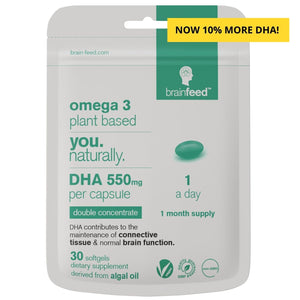
Like Rhonda, we believe in the importance of omega 3s for brain health, which is why we developed the first plant-based omega 3 delivering 550mg of DHA per algae oil capsule. It’s ideal for those who want to prioritise brain health, increase their DHA intake, or choose a vegan-friendly option.


Vitamin D: Your partner all year round
Rhonda Patrick takes vitamin D3 with K2 to increase its function. She takes 5,000 IU of vitamin D3 with K2 daily, in the evening alongside her omega 3s.
Vitamin D and the science
Vitamin D is known as the sunshine vitamin as the human body synthesizes it when skin is exposed to ultraviolet B (UVB) radiation from sunlight[5 Trusted Source 2013 - Dermato-endocrinology Research evaluation Sunlight and Vitamin D: A global perspective for health ] . A 2025 structured review, analysing 13 studies across clinical trials and observational data, suggests that vitamin D supplementation of at least 2,000 IU per day for 12 weeks increased levels of a protein that supports the survival and growth of brain cells, called BDNF, by approximately 7%, while also reducing scores on validated measures of depressive symptoms[6 Trusted Source 2025 - Nutrients Research evaluation Impact of Vitamin D Status and Supplementation on Brain-Derived Neurotrophic Factor and Mood-Cognitive Outcomes: A Structured Narrative Review ] . The same review suggests that for every 10 ng/mL increase in blood vitamin D levels, cognitive performance scores improved and circulating BDNF levels increased by approximately 15%[6 Trusted Source 2025 - Nutrients Research evaluation Impact of Vitamin D Status and Supplementation on Brain-Derived Neurotrophic Factor and Mood-Cognitive Outcomes: A Structured Narrative Review ] .
Our take: opt for the sunlight and vitamin D combo
For a nutrient your body can only produce through direct sunlight exposure, consistent supplementation throughout the year is one of the most straightforward steps you can take to support your brain's resilience.
Multivitamin: What is considered a good multivit?
A high-quality multivitamin acts as an insurance policy against micronutrient shortfalls that even a good diet can miss. Dr. Rhonda alternates between the Pure Encapsulations O.N.E. and the Thore 2/Day multivitamin, and takes one or the other in the afternoon alongside her lunch. If you’re interested in what she’s getting when she takes each of them, click below to view the details.
Click to view table
|
Pure Encapsulations O.N.E Multivitamin |
Thorne 2/Day Multivitamin |
||
|---|---|---|---|
|
1 capsule contains: |
2 capsules contain: |
||
|
Vitamin A |
296 mcg Vitamin A Acetate |
Vitamin A |
450 mcg Beta Carotene |
|
504 mcg Beta Carotene |
600 mcg Palmitate |
||
|
Vitamin C |
180 mg Ascorbic Acid |
Vitamin C |
250 mg Ascorbic Acid |
|
Vitamin D |
2,000 IU/ 50 mcg Cholecalciferol |
Vitamin D |
2,000 IU/50 mcg Vitamin D3 |
|
Vitamin E |
30 IU/ 20 mg d-alpha tocopherol succinate |
Vitamin E |
16.5 mg d-Alpha Tocopheryl Acid Succinate |
|
Vitamin K |
65 mcg Vitamin K1 |
Vitamin K |
200 mcg Vitamin K1 |
|
10 mcg Vitamin K2 |
200 mcg Vitamin K2 |
||
|
Thiamin |
3 mg Thiamin HCI |
Thiamin |
50 mg Thiamin HCI |
|
Riboflavin |
1.7 mg Riboflavin |
Riboflavin |
12 mg Riboflavin 5'-Phosphate Sodium |
|
1.7 mg Riboflavin 5'-Phosphate |
|||
|
Niacin |
20 mg Niacinamide |
Niacin |
80 mg Niacinamide |
|
Vitamin B6 |
2.5 mg Pyridoxine HCI |
Vitamin B6 |
20 mg Pyridoxal 5'-Phosphate |
|
2.5 mg Pyridoxal 5'-Phosphate |
|||
|
Folate |
400 mcg L-5-Methyltetrahydrofolate |
Folate |
667 mcg L-5-Methyltetrahydrofolate |
|
Vitamin B12 |
500 mcg Methylcobalamin |
Vitamin B12 |
600 mcg Methylcobalamin |
|
Biotin |
300 mcg |
Biotin |
500 mcg |
|
Pantothenic Acid |
10 mg Calcium Pantothenate |
Pantothenic Acid |
45 mg Calcium Pantothenate |
|
Iodine |
150 mcg Potassium lodide |
Calcium |
52 mg Calcium Bisglycinate Chelate, Dicalcium Phosphate, Calcium Laurate, Calcium Pantothenate |
|
Zinc |
25 mg Zinc Citrate |
Iodine |
75 mcg Potassium lodide |
|
Selenium |
55 mcg Selenomethionine |
Magnesium |
20 mg Magnesium Bisglycinate Chelate |
|
Selenium |
55 mcg Selenomethionine |
Zinc |
15 mg Zinc Bisglycinate Chelate |
|
Manganese |
2 mg Manganese Citrate |
Selenium |
200 mcg L-Selenomethionine |
|
Chromium |
200 mcg Chromium Picolinate |
Copper |
750 mcg Copper Bisglycinate Chelate |
|
Molybdenum |
75 mcg Sodium Molybdate |
Manganese |
3 mg Manganese Bisglycinate Chelate |
|
Choline bitartrate |
25 mg |
Chromium |
400 mcg Chromium Nicotinate Glycinate Chelate |
|
Inositol |
25 mg |
d-Gamma Tocopherol |
24 mg |
|
Coenzyme Q10 |
41 mg Ubiquinone |
Boron |
2 mg |
|
9 mg MicroActive Q10 |
|||
|
Alpha Lipoic Acid |
50 mg |
Lutein |
140 mcg |
|
Lutein |
3 mg |
||
|
Zeaxanthin |
500 mcg |
||
|
Lycopene |
500 mcg |
||
Multivitamins and the science
The research supporting daily multivitamin use has strengthened considerably in recent years. A landmark meta-analysis drawing on three separate randomised controlled trials with over 5,000 participants, suggests that a daily multivitamin benefits cognitive ageing by the equivalent of two years compared to placebo[7 Trusted Source 2024 - The American Journal of Clinical Nutrition Systematic and meta-analysis Effect of multivitamin-mineral supplementation versus placebo on cognitive function: results from the COSMOS randomized clinical trial and meta-analysis ] . Researchers also observed statistically significant improvements in episodic memory, the type of memory used to recall past events and experiences[7 Trusted Source 2024 - The American Journal of Clinical Nutrition Systematic and meta-analysis Effect of multivitamin-mineral supplementation versus placebo on cognitive function: results from the COSMOS randomized clinical trial and meta-analysis ] .
Our take: form matters more than you think
Look for one covering more than 20 essential micronutrients, including methylated forms of B vitamins, the active, ready-to-use versions of B6, B9, and B12, rather than other forms the body has to convert before it can use them. Given that most people have at least one consistent dietary gap, this supplement earns its place as the quietest overachiever in the stack if you get a high quality one.
Magnesium: How much magnesium glycinate does Rhonda Patrick take?
She takes 120 mg of magnesium daily, in the evening. Magnesium is a mineral involved in over 300 processes in the body, from energy production to communication between nerve cells. Magnesium glycinate is a form of magnesium bonded to the amino acid glycine, which makes it gentler on digestion and particularly well absorbed[8 Trusted Source 2019 - Biological Trace Element Research Human study Dose-Dependent Absorption Profile of Different Magnesium Compounds ] . Dr. Patrick takes 120 mg of it in the evening, where it supports sleep quality, muscle relaxation, and nerve function.
Magnesium and the science
The science backs this timing: a 2025 randomised, double-blind, placebo-controlled trial of 155 adults suggests that magnesium bisglycinate (250 mg of magnesium daily) produced a statistically significant reduction in insomnia severity scores compared to placebo after four weeks[9 Trusted Source 2025 - Nature and Science of Sleep Human study Magnesium Bisglycinate Supplementation in Healthy Adults Reporting Poor Sleep: A Randomized, Placebo-Controlled Trial ] . A separate meta-analysis suggests that magnesium supplementation reduced the time it takes to fall asleep by approximately 17 minutes in older adults[10 Trusted Source 2021 - BMC Complementary Medicine and Therapies Systematic and meta-analysis Oral magnesium supplementation for insomnia in older adults: a Systematic Review & Meta-Analysis ] , which is a meaningful benefit for those whose sleep quality naturally declines with age. Magnesium also plays a central role in producing the body's energy currency, ATP, and in regulating the stress hormone cortisol that, when elevated at night, is one of the most common disruptors of deep sleep[11 Trusted Source 2025 - Nature and Science of Sleep Research evaluation The Mechanisms of Magnesium in Sleep Disorders ] ,[12 Trusted Source 2023 - Nutrients Research evaluation Magnesium - An Ion with Multiple Invaluable Actions, Often Insufficiently Supplied: From In Vitro to Clinical Research ] .
Our take: 300 reactions, one essential mineral
While magnesium plays such an important part in the chemical processes in the body, most people are quietly running low without knowing it. Modern intensive farming has steadily depleted magnesium from soil, meaning even people eating plenty of wholegrains, nuts, and leafy greens are getting less than they think. What makes it trickier is that standard blood tests don't reliably catch a deficiency, since the body keeps serum levels stable by pulling from tissues and bone. A quality magnesium supplement, ideally in glycinate form for actual absorption rather than oxide, is one of the additions to your current stack where the case for "most people need this" genuinely holds up.

Sulforaphane: The reason behind broccoli’s healthy properties
When cruciferous vegetables, particularly broccoli and brussel sprouts, are chopped or chewed, a compound in the vegetables transforms into its active form, sulforaphane. Once inside the body, sulforaphane activates a master antioxidant and cellular defence switch[13 Trusted Source 2016 - Vascular Pharmacology Animal study Sulforaphane induces neurovascular protection against a systemic inflammatory challenge via both Nrf2-dependent and independent pathways ] . Dr. Patrick, who has researched sulforaphane extensively and grows broccoli sprouts at home, takes it daily with breakfast, either through freshly prepared sprouts or a standardised supplement.
Sulforaphane and the science
A 42-month study published in early 2026 exploring broccoli sprout supplementation and cognitive function suggests meaningful improvements in cognitive outcomes over the follow-up period[14 Trusted Source 2026 - Frontiers in Nutrition Human study Efficacy of 42-month oral administration of glucoraphanin in preventing cognitive decline in individuals at elevated risk of dementia: a randomized, double-blind, placebo-controlled pilot study ] . These findings point to sulforaphane's ability to reduce oxidative stress in the brain as a hypothesised factor in potentially protecting cognitive function over the long term[15 Trusted Source 2025 - Nutrients Research evaluation Sulforaphane and Brain Health: From Pathways of Action to Effects on Specific Disorders ] , which is precisely why Dr. Patrick considers it a non-negotiable part of her daily routine.
Our take: snack on raw organic broccoli
Sulforaphane forms only when its building block, stored in plants like broccoli, meets a chemical that helps it transform it into the now well-known nutrient. This enzyme is broken down by cooking, meaning a portion of roasted broccoli may deliver almost no sulforaphane. When choosing a supplement, look for either stabilised active sulforaphane or a glucoraphanin extract that includes myrosinase. Otherwise you're likely paying for a building block that never converts and offers the benefits.
Together, these supplements address the foundational requirements for a brain and body performing at its best. This evidence-based stack is minimal and built around the systems that matter most for long-term health for Dr. Rhonda Patrick. Omega 3 fats are the ones she relies on the most, particularly DHA which stand out for their foundational role in brain structure and function. If you take one thing from her routine, making sure your DHA intake is consistent is the place to start.
References
[1] Guesnet, P. et al. (2011). Docosahexaenoic acid (DHA) and the developing central nervous system (CNS) - Implications for dietary recommendations. Biochimie, [online] 93(1), pp.7–12. https://www.sciencedirect.com/science/article/abs/pii/S0300908410001823
[2] Weiser, M. J., Butt, C. M., & Mohajeri, M. H. (2016). Docosahexaenoic Acid and Cognition throughout the Lifespan. Nutrients, 8(2), 99. https://www.mdpi.com/2072-6643/8/2/99
[3] Dighriri, I. M., Alsubaie, A. M., Hakami, F. M., Hamithi, D. M., Alshekh, M. M., Khobrani, F. A., Dalak, F. E., Hakami, A. A., Alsueaadi, E. H., Alsaawi, L. S., Alshammari, S. F., Alqahtani, A. S., Alawi, I. A., Aljuaid, A. A., & Tawhari, M. Q. (2022). Effects of Omega-3 Polyunsaturated Fatty Acids on Brain Functions: A Systematic Review. Cureus, 14(10), e30091. https://www.cureus.com/articles/116591-effects-of-omega-3-polyunsaturated-fatty-acids-on-brain-functions-a-systematic-review#!/
[4] Calder, P. C., Cawood, A. L., James, C., Page, F., Putnam, S., & Minihane, A. M. (2025). An overview of national and international long chain omega-3 polyunsaturated fatty acid intake recommendations for healthy populations. Nutrition research reviews, 39, e6. https://www.cambridge.org/core/journals/nutrition-research-reviews/article/an-overview-of-national-and-international-long-chain-omega3-polyunsaturated-fatty-acid-intake-recommendations-for-healthy-populations/2B7F6FD161EE90A7472B2B20909C4926
[5] Wacker, M., & Holick, M. F. (2013). Sunlight and Vitamin D: A global perspective for health. Dermato-endocrinology, 5(1), 51–108. https://www.tandfonline.com/doi/full/10.4161/derm.24494
[6] Skoczek-Rubińska, A., Cisek-Woźniak, A., Molska, M., Heyser, M., Trocholepsza, M., Pietrzak, S., & Mruczyk, K. (2025). Impact of Vitamin D Status and Supplementation on Brain-Derived Neurotrophic Factor and Mood-Cognitive Outcomes: A Structured Narrative Review. Nutrients, 17(16), 2655. https://www.mdpi.com/2072-6643/17/16/2655
[7] Vyas, C. M., Manson, J. E., Sesso, H. D., Cook, N. R., Rist, P. M., Weinberg, A., Moorthy, M. V., Baker, L. D., Espeland, M. A., Yeung, L. K., Brickman, A. M., & Okereke, O. I. (2024). Effect of multivitamin-mineral supplementation versus placebo on cognitive function: results from the clinic subcohort of the COcoa Supplement and Multivitamin Outcomes Study (COSMOS) randomized clinical trial and meta-analysis of 3 cognitive studies within COSMOS. The American journal of clinical nutrition, 119(3), 692–701. https://www.sciencedirect.com/science/article/pii/S0002916523663427
[8] Ates, M., Kizildag, S., Yuksel, O., Hosgorler, F., Yuce, Z., Guvendi, G., Kandis, S., Karakilic, A., Koc, B., & Uysal, N. (2019). Dose-Dependent Absorption Profile of Different Magnesium Compounds. Biological trace element research, 192(2), 244–251. https://link.springer.com/article/10.1007/s12011-019-01663-0
[9] Schuster, J., Cycelskij, I., Lopresti, A., & Hahn, A. (2025). Magnesium Bisglycinate Supplementation in Healthy Adults Reporting Poor Sleep: A Randomized, Placebo-Controlled Trial. Nature and science of sleep, 17, 2027–2040. https://www.dovepress.com/magnesium-bisglycinate-supplementation-in-healthy-adults-reporting--peer-reviewed-fulltext-article-NSS
[10] Mah, J., & Pitre, T. (2021). Oral magnesium supplementation for insomnia in older adults: a Systematic Review & Meta-Analysis. BMC complementary medicine and therapies, 21(1), 125. https://link.springer.com/article/10.1186/s12906-021-03297-z
[11] He, C., Wang, B., Chen, X., Xu, J., Yang, Y., & Yuan, M. (2025). The Mechanisms of Magnesium in Sleep Disorders. Nature and science of sleep, 17, 2639–2656. https://www.dovepress.com/the-mechanisms-of-magnesium-in-sleep-disorders-peer-reviewed-fulltext-article-NSS
[12] Barbagallo, M., Veronese, N., & Dominguez, L. J. (2023). Magnesium-An Ion with Multiple Invaluable Actions, Often Insufficiently Supplied: From In Vitro to Clinical Research. Nutrients, 15(14), 3135. https://www.mdpi.com/2072-6643/15/14/3135
[13] Holloway, P. M., Gillespie, S., Becker, F., Vital, S. A., Nguyen, V., Alexander, J. S., Evans, P. C., & Gavins, F. N. E. (2016). Sulforaphane induces neurovascular protection against a systemic inflammatory challenge via both Nrf2-dependent and independent pathways. Vascular pharmacology, 85, 29–38. https://www.sciencedirect.com/science/article/abs/pii/S1537189116300659
[14] Shimizu, S., Kasai, S., Suzuki, C., Kon, T., Suganuma, H., Suzuki, S., Murashita, K., Nakaji, S., Ihara, K., Tomiyama, M., & Itoh, K. (2026). Efficacy of 42-month oral administration of glucoraphanin in preventing cognitive decline in individuals at elevated risk of dementia, including those with mild cognitive impairment: a randomized, double-blind, placebo-controlled pilot study. Frontiers in nutrition, 13, 1740494. https://www.frontiersin.org/journals/nutrition/articles/10.3389/fnut.2026.1740494/full
[15] Fahey, J. W., Liu, H., Batt, H., Panjwani, A. A., & Tsuji, P. (2025). Sulforaphane and Brain Health: From Pathways of Action to Effects on Specific Disorders. Nutrients, 17(8), https://www.mdpi.com/2072-6643/17/8/1353


Leave a comment
Open tab